
Matt Ebb leaves full-time Blender development

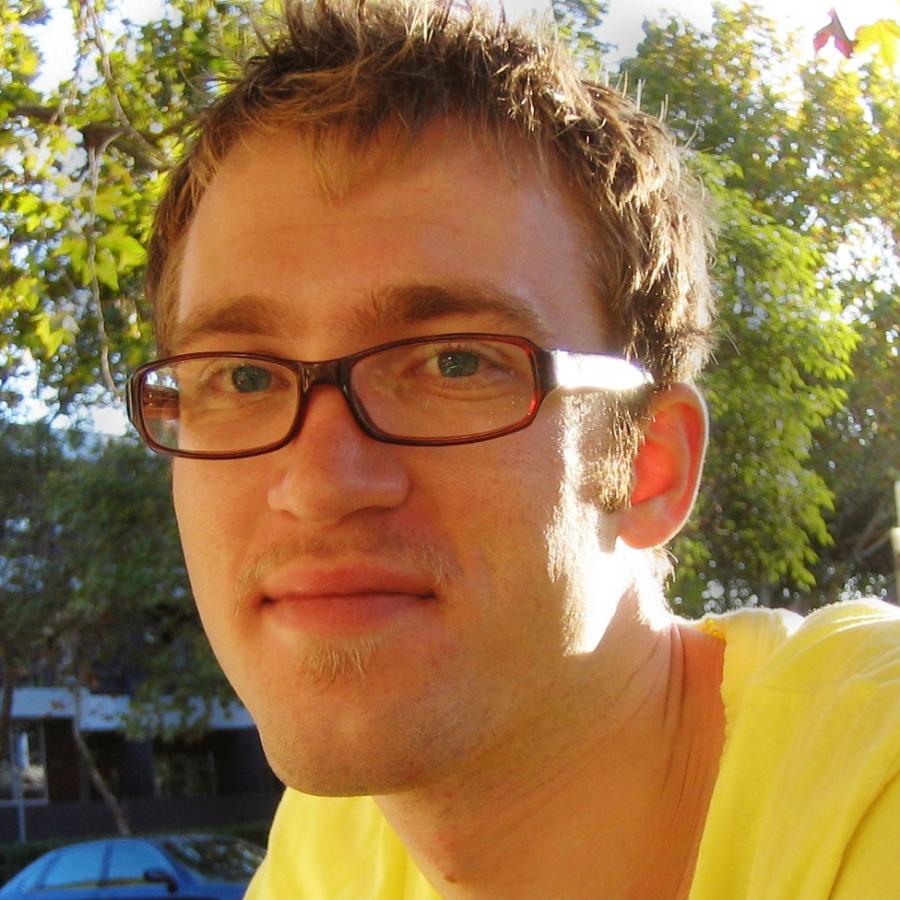 After a mysterious sponsorship, the Blender Foundation was able to hire developer/artist Matt Ebb. Now, after 8 months, Matt has announced that he’ll resign from that position (which doesn’t mean he won’t be working on Blender development at all anymore).
His work was never very visible to me, so I invited him to tell us more about what he has been doing. It’s an interesting read that highlights some of the complexity and hard work that’s involved with Blender’s development.
Thanks for all your help Matt! I’m sure you’ll be missed. (But I’m also sure we’ll be seeing you around ;-)
Update: changed the title and description above a bit to more accurately reflect the situation.
Matt writes:
In November last year I was hired by the Blender Foundation (financed by a generous anonymous sponsor) to speed up Blender 2.5 development, working from home here in Sydney. 8 months later, it’s time for me to call it a day. The initial plan for this project was to first complete the features and functionality that has been begun to be implemented for the 2.5 release, to be followed later by additional ui related work, that had been planned/desired during 2.5 development but not been implemented yet.
I started off working on implementing and polishing assorted smaller features such as restoring old tools, improving the key maps ui, colour picker, brush system, animation system work, painting ui, rna/operators/notifiers cleanups, and the splash screen among others. Additional to this were other jobs such as writing the 2.5 release notes and supporting other volunteer coders. One thing that came apparent quite quickly though, was the steady stream of bug reports coming in, which needed to be dealt with.
I think in the initial scheduling, I underestimated the amount of bug fixing that would be required. As alpha 0 was released and people started using 2.5 in more practical situations (including the Durian team), more and more bugs were reported. With a new version 2.5, people are also looking over Blender with a fresh, critical eye – there have been several bugs reported recently which have existed in older versions of Blender too. This is a good thing though! The community participation in this continues to be great, and the end result has been, and will be, a better Blender for everyone.
At first it took quite some time to get comfortable in the bug hunt. Blender has a very large code base spanning so many different features, written by so many different coders. It’s hard enough to be fully familiar with all areas of Blender as a user, let alone understand the code behind all of it too ;) Upon starting this job I was familiar with the code base in general, however there were still many areas of Blender (and the new 2.5 architecture) that were relatively new to me. So especially early on, fixing bugs would often involve spending a few hours just reading through unfamiliar code to learn how it should be working, in order to find the problem and then solve it. As time progressed, this improved though – over my time here I estimate fixing about 350, and diagnosing several more, too.
To be fair, even though there have been more bugs than expected, in hindsight I still think that relative to the enormous amount of new code added, we’re still doing pretty well. In some areas like the vast new RNA system for example, I’ve really only seen about a handful of bugs, which is quite impressive indeed.
Part of my responsibility was also managing the bug tracker and the reports coming in – nagging people for reproducible test files, testing reports to confirm them, diagnosing issues with the reporters, assigning, rejecting, closing and moving reports. I’d like to give a big “thank you” here to some of the familiar user names I’ve seen on the tracker, non-coders who have helped enormously by clarifying and verifying reports on their own systems. It’s not a glamorous job, but it’s incredibly important and helpful, and one that all users can easily get involved with. Thanks also to people who have submitted clearly written, reproducible reports with test files. The best way to get your reports fixed promptly is to follow the reporting guidelines when you post it – it’s only fair for users to put in a minimal amount of effort to help the coders who may well be spending hours tracking a problem down.
In the last month or so, Diego Borghetti joined the team, giving me some relief from tracker duties so I could work on a few more todo items on the roadmap before 2.5 beta, such as interaction presets, some work on the multithreaded jobs system with progress indicators, improving the non-blocking reporting system ui, and also doing the groundwork for changes in how Blender installs on your system. In the end, I was hoping to spend more time on developing ui features such as radial menus and generic manipulators, but it was much more important to concentrate on getting blender to a stable, reliable state, as a good foundation to build these and other new features on in the future.
I’d like to thank our sponsor and the Blender Foundation (Ton) for this opportunity, as well as Brecht and Campbell, the other full-time developers on Durian, and the volunteer community. It’s been an interesting experience, but now it’s time for me to move on – I’m looking forward to getting back into more regular creative production work, as well as developing some new skills in other areas and working on some personal projects. Hopefully interesting times ahead!



Thanks for your work !
you are leaving the Dev. Team but you are not out of the world ;)
M@tt!!
Thanks for you great effort and passion for Blender community
Mucho exito en tus futuros proyectos.
He looks tired. Note to self: Avoid bug tracking jobs.
All the best to you !!!
Thanks for the hard work Matt. All the best for the future. Hope that in the future you will work again in the Blender team.
Thanks allot Mathh for all the work you did for the blender team. You most of worked really hard on that because the blender code is soo confusing as I had a look at it myself but you have done a great job thankyou.
Bye bye Matt; A change is always a good thing :D
Seeya Mat! sorry to hear you’re going. With any luck they can get someone else.
Thanks a lot for your great work and best wishes for the future. Maybe a future with less bugs. :)
Thanks for the kind words! I should be clear, this doesn’t necessarily mean i’ll stop contributing to Blender in general, but it’s the end of this paid contract for doing this full time.
Thanks Matt. Great thanks for all your contributions and hard work. Wishing you the best future.
Great Thanks for Your job and best wishes for the future.
Greetings
thanks Matt!!
Now, everybody…
DONATE DONATE DONATE!!!
Bye Matt, you’ll be missed!
You know guys…bug fixers are the unsung heroes of Blender and any coding team!
People often yell and scream “features-features-features”, and while they are the most gratifying things (like candy) they’re just a quick fix in comparison to fixing bugs that will ensure that your software is running smoothly and making sure you land that job in the end…
grammar nazi:
“The initial plan for this project was to first complete the features and functionality that [has been begun] to be implemented for the 2.5 release”
-had begun
-were beginning
-began
I know I bugged matt about a bug or two. Usually the next day the bug was resolved. Thanks Matt I’m gonna miss ya.
Matt, it was wonderful watching you work … bug tracking, probably one of the most crucial jobs.
Thanks Matt, you’re a priceless value for Blender.
Now get your butt on some mind blowing design work ! :)
Good luck and have fun on your next gig Matt. You’re hard work (along with the rest of the team!) has no doubt been invaluable at the Blender institute.
Matt, where would be a good place to start learning how the Blender 2.5 codebase works? Its pretty hard finding documentation for someone starting off trying to understand it.
James: try on the IRC channel to ask the question about the documentation.
And see this to find where you can find that IRC channel (and more):
http://www.blendernation.com/developers-meeting-sunday-april-4th/
Hi Matt, thanx for your all efforts and hard work – it’s greatly appreciated. It’s good to hear that you’ll continue to contribute to Blender. Best of luck with your future projects.
good job lad,
it’s great to see an artist with amazing programming skill like you
it’s very rare in my country
Thanks for your hard work, Mattt. And good luck on your new endeavors. I’m sure we’ll see you around, so it’s so long, not goodbye ;-).
Nooo!! Blender needs you!!
I agree with the above; thanks and well done! I imagine creating new features and GUI improvements are less boring than bug managing and fixing, but very important nonetheless.
Good luck and see you around!
Matt, thanks alot for your work, and also, dear unknown sponsor, thanks for paying him for this time.
Re-reading the posts, i’m pretty confused:
The anouncement of the “mysterious sponsorship” says there was a “sponsorship to hire a full-time Blender developer for 9 months”.
The article above says “Now, after 8 months, Matt has announced that he’ll resign from that position”. On his own website Matt writes: “As of last week, I’ve decided it’s time to finish up with my full time Blender development contract and move on to new things”
counting to nine, there is one month missing, i’m confused about this: can s.o. clearyfy this?
Matt “decided” to finish his full time job just a month before it would have ended anyway?
?? 8-/ ??
Why doesn’t the sponsor want to be revealed?
High five, Matt! You done good, sir.
thanks man! hope to see you soon
Many thanks, dude!
I didn’t know Blender has a grammar nazi.
-has had?
-haven?
-hadden?
-Susan?
/* NOTE FOR PROGRAMMERS */
/* DONT FORGET TO _ALWAYS_ COMMENT YOUR CODE
AS DETAILED AS POSSIBLE.
YOU CAN HAVE _NOW_ VERY CLEAR WHAT IT DOES
BUT NOT THE GUY WHO HAS TO MAiNTAIN IT,
NEITHER EVEN YOURSELF IN LESS TIME THAT YOU COULD THINK */
I always admire your work,
and it sound weird you having to leave the development team.
Can you tell me one more thing before you go…
Have you by any chance seen Angela Guenette…
I am sure she was working on the Durian but I have not heard from
her from quite some time now…
Thank you Matt! The shadow man! :)
Nevertheless, Blender has one of the best documented website regarding the code, design etc…
@J. – Why doesn’t the sponsor want to be revealed?
Because Adobe is afraid of the backlash from the Blender community. Now look what u made me do!
Always admired the guys “in the trenches” who did the unsung & difficult jobs of cleaning up & correcting the errors & mistakes of other coders ;-P …..
Just one advice of a guy who has written programs in many different computer languages: consider earnestly the tools of “Literate programming” (especially NoWEB by Norman Ramsey) when writing new code (or documenting “unchartered territories” others left behind): it’s much better than “simply” adding comment lines to your code which nearly always “clutter up” the code base.
I have used it ever since I read Don Knuth TeX sources (which are brillantly documented by the way) and even after years I’m able to delve quickly in complicated code written by myself in reading the docs created by the NoWEB tools. Besides that even complicated stuff like matrix multiplications (needed for 3D transforms) can be included in the docs “on the fly” as you have the complete power of the TeX language at your disposal.
Although you have to invest some time of documenting your code while you are developing it you really will appreciate the pay-off when developing your code base in the long-time run. And it changes your attitude to your own coding as it lets you “think twice” when commenting it to make your intentions and the tricks used to attain your goal clear.
Matt – thanx a lot for the services you did to Blender & keep up the good work !
grammar nazi:
“The initial plan was to implement any remaining features and functionality planned/desired for the 2.5 release, followed by additional ui related work.”?
Thank you for your work, Matt!
ITS MICROSOFT!!! :D Muahahahaha
MS Blender.NET
The sponsor is Matt’s rich Uncle that was in sorrows about his nephew weather he will be able to get a “real” job.
So he invented this sponsorship to give Matt a feeling of doing something useful. It still needs to be secret, those nerds are so sensible, you know, so don’t tell Matt….
lol
@J: Anonymous sponsors are usually that way because they don’t want random people coming to them and asking for money.
I’m curious what this will mean for the Google Summer of Code project that you’re mentoring involving new input devices, Matt. I’ve been trying to get in touch with you about that.
Thanks Matt.
THANK YOU MATT!!!!
Thank you for your work hard, Matt.
Thank you very much for your efforts!
We should highlight the fact that the new blender base code is well well more structured than before!
Everything is so solid now! wow
Very nice work guys!
B
Thanks, Matt!
Thank you for helping in creating wonderful software BLENDER.
i used to love animation then i would go around designing and animating things with blender
what an awesome time that was but things have changed for me now so i think its time to move on with new things.