

The World’s First Open Movie Released!

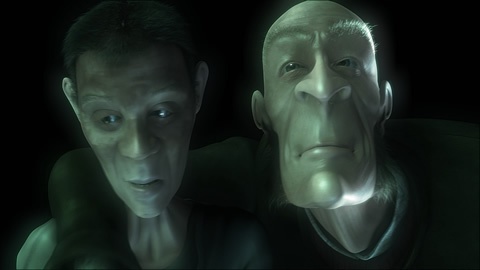
A new phenomena is making its debut in the movie industry today; the world’s first Open Movie has been released on the internet.
Ton Roosendaal has once again relentlessly turned a vision into reality: the dream to prove the power of Open Source software by creating a movie that could match itself with any commercial product.Open Content
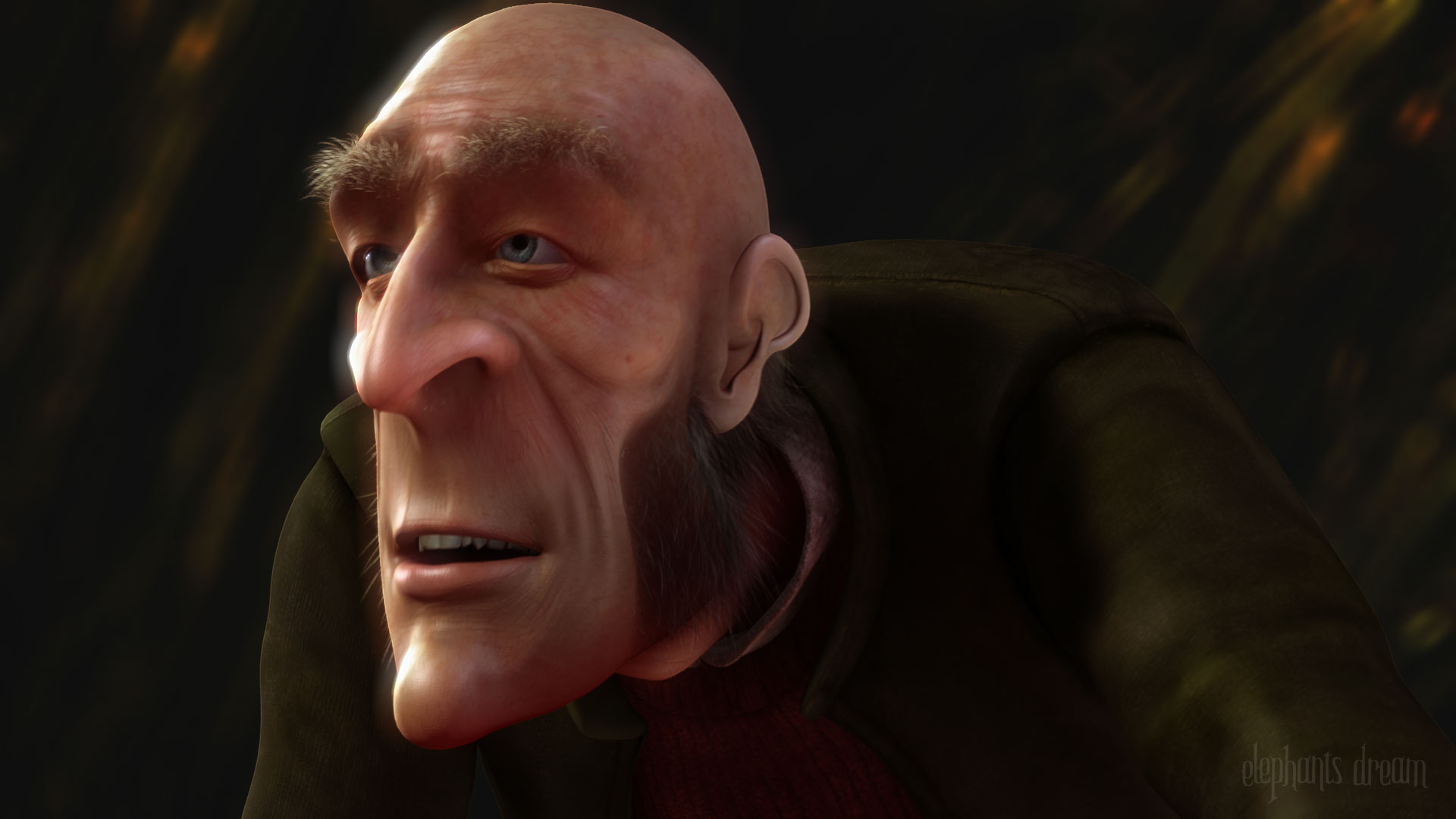 Not only would the movie be made using Open Source software, but the contents themselves were to be Open as well: all of the digital assets and production files are released under a Creative Commons license, allowing everyone to see how the movie was made, make changes to it and create a new, derived movie. This will be an invaluable archive not only for the Blender community, but for the 3D community in general.
The Movie
 Six of the most brilliant Blender users from all over the world were invited to work together with him at Montevideo/Time Based Arts in Amsterdam, the Netherlands for seven months.
The impressive music and sound effects were produced by Jan Morgenstern, a German composer who had worked with the Blender Foundation before.
In those seven months, they started from scratch: even the script still had to be written. The story evolved from an idea into a nine and a half minutes long, dark, compelling tale that will have you watch it again and again and that proves beyond any doubt that Blender is a movie-capable professional 3D application.
Blender Development
 And it didn’t end there. Ton aimed to recreate the setting that Blender was born in: a small animation studio where the software developer was in constant touch with the artists, building the tools that they needed and continually improving the software as the project went along. With Ton in the lead and aided by several international Blender developers, Blender has seen an incredible boost in features (see the complete overview) which will all be available in the upcoming 2.42 release.
Render Farm
Rendering such a movie on film resolution is no small task: thankfully Bowie State University donated access to XSeed, their cluster of 240 Dual-core Xserves to render the movie. XSeed took over 125 days to render the movie, using up to 2.8GB of memory to render a single frame. With each high resolution image consisting of up to 9 different layers, terabytes of data were flying across the globe and pouring into the Amsterdam studio.
The DVD
 This project was partly paid for by the presales of the project DVD that was created by Joeri Kassenaar; all of the project’s files as well as some bonus material is bundled on it.
Even now that the files are all available on the internet, it is still worthwhile to purchase the DVD as Ton has already hinted that he is already contemplating his next movie project.
In Conclusion
History is being made today and I am convinced that Ton has set a trend that many others will follow.
I have nothing but the deepest respect for the team members and this project has made me (once again) truly proud to be a member of this community.
Relevant Links


@Bart,
Great article!
@Everybody,
Please help the ED movie reach all corners of the earth by digging it here:
http://digg.com/movies/Elephants_Dream,_the_Open_3D_Animated_Movie_Released_On-line
Hopefully we can get this on the homepage of digg.com and other popular sites.
TY Orange Team!
spidey
HUGE NEWS! Be sure to digg the story so the rest of the planet that aren’t Blender users get the message that Blender and the Orange team have taken their place in halls of great 3D works.
http://digg.com/movies/Elephants_Dream,_the_Open_3D_Animated_Movie_Released_On-line
I just got my dvd last night. It plays TERRIBLE on my PS2, XBOX and DVD player. The menus are the worst. Iam however very happy that I was able to see all the artists faces, and after about the third time watching it, i really like the film’s idea. (more later When i’m not typing with a virtual keyboard!)
Ha Ha. What took u blendernationals to report this so late? I guess u were too busy downloading; u forgot to post here.
good news ! :)
but what about subtitles? i can’t see it.
Cool! Great work!
@applegrew: I was busy helping the Orange team putting up their website. After that I had to catch my train home and during the trip the movie was released :-)
Hi am posting it here also. While downloading from the link given at the orange site (http://xseed.bowiestate.edu/ED/ED_1024.avi), I was suddenly slapped with an error “File changed on server!”. I was at 39%! I am now redownloading. I am now at just 5%.:-(
Can someone who can help will please do something about it? It can still save a lot of my time. I dying to see the movie & it is already 12.52 at night here.
>:-( bouhouhou!!!, I still haven’t received my DVD…BOUHOUHOUSoB Snirf… :-/
Well, it looks like the elephants dream server is under quite a bit of strain. Here is a link to the torrent so we don’t kill the server:
http://tribler.org/content/Elephants_Dream_1024.avi.torrent
Buhuuuuu!!!! No of the video downloads work, except the torren which is slooooom :(
Ton is working on the temporary page right now; the links should be ok in a few minutes.
Was the sound also done with Open Source tools?
I remember reading that it would be released in Ogg Theora format as well… What happened to that ?
Great site Matt!
Nice…. Im downloading the file now….. Men im so excited!!!!
Well thanks to digg the elephantsdream site is really taking a beating. I can’t imagine how many people must be watching it!
How long is this film?
Excellent! Downloading the highest resolution one now!
@ bmud
Have you tried both the PAL and the NTSC DVD?
*seeding*
I wish torrent clients had an option to just upload, at least mine (Transmission) doesnt. :P
And to answer my own question, the sound wasn’t done with OSS, I remembered from the commentary tracks that Mr. Morgenstern used, probably among other tools, Reaktor.
For everyone waiting for the download to finish:
You wouldn’t have the problem if you buy the dvd ;-)
*goes watching the dvd once more* ;)
xseed.bowiestate.edu doesn’t respond. Please do something about it. I am at 93%. Can’t wait to see the movie. Please. :(
these files arent playable, Elephants_Dream_1024.avi (from torrent or server) ->mplayer->error , now i’m downloading for the third time – Elephants_Dream_1024.mov , maybe this will play :\
filipp: I do not know. I don’t know about sounds but Jan Morgensten (www.wagemage.com) produced the music, and have no idea what tools he used.
What CODEC was used? I can’t seem to play the avi ro the quicktime file
Thanks
The movie is very very beautiful, You can continue in this way.
Very great job. Congratulation.
The movie is so short! 10.53 min! I was just trying to make out what was happening then …credits! This is too short. I expected at least 30 mins. U can’t call a 10.53 short a movie. :-(
The effects were great, but there were too many unusual body movements. It is too dramatic. And is there a story?. Maybe u named it Dream because only in dreams can such a sequence of things occur.
Summarily Speaking:
Story & duration of “movie” :-(
Music & effects :-)
Human movements :-|
Orangers. Please for the next movie first start with a good script. If u can’t think of any then arrange a contest OR use any famous (or just good) stories like Sherlock Holmes’ (well do make sure they r in public domain)….And pls. make a full length film not a short. I can wait for the movie for years, but can’t be satisfied by a short after waiting 9 months for it.
If anybody has any idea about what the story is about, pls. post.
I have downloaded the movies via bittorrent onto my webspace at our institute:
http://www.isw.uni-stuttgart.de/~xbk/Filme/Orange/
applegrew: It’s nearly impossible to create a full-length animated film in 7 months with a crew of under 10 people. Also, the Orange Team said that the runtime for the movie was around 9-10 minutes. (Before they said that, they said that the movie would be a “short” as opposed to a “feature-length” film.)
*WARNING: STORY SPOILERS*
The story, at least how I understand it, has to do with people’s realities (or their perceptions of their own realities). It’s like each of the characters is creating their own reality. For a while, Emo accepts Proog’s beliefs about “reality”, but in the end he starts creating his own, as the “tentacles” and the Collosus of Rhodes appear.
A big plus to having the DVD is definately the commentary tracks. (I’ve listened to Andy & Bassam’s, so far, and I plan on listening to the others to get more details.)
Where are the elephants?
If you’ve downloaded the movie and “it won’t play”, try playing it in the VLC media player. It’s one of the best media players to use. You’ll find many videos online that seem to be “corrupted” but they play fine in VLC.
I believe this info has been passed along many times…it helps when you slow down and actually read the entire posts.
Hi there !
1. Great work ,by the size of the crew and the timeframe…wow!
2. ..i am wondering that i get a download this morning.( ~30 minutes for the small version of the
movie )
3. I HATE QUICKTIME ( have problems to play the mov file,try to get an Avi file next time…)
…but, i like this blender folks! Many people spent a lot of their time and power for this projekt
and the result is great ( what i see till now. Did i say i hate Quick…?).
I am sure that the orange projekt will bring as also a very intresting new BLENDER version (2.42).
…and now i will force this Quicktime sh** to show me the rest of this movie or i try
to read al the other comments over Server,downloads and so on.
Yay! I’ve been waiting to see this!
Now all I need to do is download… oh wait, I’m on dialup :( And I can’t use the school computers, they closed exactly this day, for the whole exam period and all summer till next September… Yep, its gonna be a few weeks to download the 400 MB AVI at home. Hopefully worth the wait.
blendercross: yeah, I hate QuickTime too, I don’t see why it became so popular, it’s slow, eats system resources, and its a proprietary format. AND NO FULLSCREEN!!! What’s up with the no full-screen “dis-feature” of QT, which brilliant Apple software engineer came up with that?
Love it! Love it! Love it! I’ve seen it 5 times! Each time I love the story more. I let the torrent all night and I’ll continue seeding until every person in this planet have a copy of the movie. Nice work Orange!!! the 400 avi looks more than great just the sound sometimes kills the dialogs if u use just 2 speakers. Great sound, great animation, great story. I didn’t dare to download the 1920 HD version first, but I’m sure I will, I’ll burn it and show it to all people I know, so they can see what Blendering is about. Just wanna say thx a lot!!! and really nice work!!!. Now I’m waiting for the second Orange Proyect already. :p
The AVI is an mpeg4 codec, specifically mp42. It plays in a recent mplayer with the w32codecs package for me, though xine won’t handle it for some reason. (This is on Ubuntu 5.10, “Breezy Badger”)
As for what’s going on, take note of the running theme of communications in the parts of the machine, and how Proog keeps trying to get Emo to listen — to the machine, to him, to himself.
The soundtrack was recorded and composed with propriatory software.
As the soundtrack is 50% of the experience of watching a film, this is the first film that was half made with open source software.
There are plenty of open source audio tools, and people composing with them, so there is no reason not to make an open source movie next time.
Hello,
I have still not understood the story. :-(. Pls. can somebody explain it to me.
And…I used Media Player Classic (which I installed form the package K-Lite Media Codec Pack). It played the .avi file beutifully. It can also play .mov files as easily, on top of that u can have a full screen view too! No matter which file u download it can play all & beautifully too. I remember reading somewhere that ffdshow should be used for best sound experiance; well K-Lite Media Codec has that in its package too. When u install K-Lite it will ask u to uninstall Quick time & RealMedia Player, since it can play all. Though while uninstalling QuickTime donot choose Unistall Evereything but just Uninstall, else web browsers won’t be able to play .mov files. I think everyone should try K-Lite.
Visually fantastic.
I haven’t a clue what it was about, but it kept me interested.
My interpretation of the movie is that it everything takes place inside Proogs mind. The machine is a reflection of Proogs disturbed and dark thouhts and emotions. Emo is the side of his personality that wants to get away from these thoughts. He is the only remaining part of Proog that still keeps him sane, but he’s rapidly loosing ground during the story. Once Proog kills Emo, all is lost and Proog will have to spend the rest of his life alone, surrounded by his own disturbing thoughts and fantasies.
Applegrew,
In a nutshell Emo can’t see the world that Proog is trying to show him. At first Emo seems to accept what Proog is telling him but he eventually becomes fed-up with Proog’s domineering attitude.
Supposedly this is about people imposing their realities or ideas on others. The dialog which conveys this is confusing and unnatural. I didn’t understand it at first either. I enjoy the concept now that I understand it, or believe I do. However, there is no real plot or story, nothing was resolved in my opinion. That’s fine I guess, not all movies need to be a narrative.
Hi bart!
I think your interpretation hit it short and precisly.
I tried to get the avi file this morning ,but i belive that are some ” Server and cables ” is still red glowing
from the traffic – so i start an other trie next week or so.
But by the way…..
I find the movie amazing. Maybe some of you ( Birth year 1967 or so, senior user) remember like i the following szenario: Sitting in 1989 ( 1990, 1991..) in the front of an ATARI 260ST Computer and waiting
a lot of hours, that the software offer us the result of the scene ” chromesphere on a checked floor”.
And now 15 ~ 16 year later look on orange.
I hope also like Phrozon that there is maybe a second “ORANGE PROJEKT” in the future. I belive it is
a boost for the blender development !
Greetings to you folks Blendercross
As a 3d animator director at ILM I would like to say a few words conserning your 3d animation project ”elephant’s dream”. well guys, I can only say, your film is just amazing and it seems that you have overtaken our visual works at ILM in less than 12 months. but there’s just one point that I would like to talk about the animation. your characters look very well,very well modeled (even better than our digital yoda) and they interact very well in all the scenes but there’s one problem, the motion, the face animation is still lacking of performance. some movements seem a little ”stop motion”. on the other hand all mechanical birds, the elevator sequence is very well animated.
I agree with u rob. This was a point I was trying to raise Orangers. The human movements were bit awakward. Like the scene where emo lifts himself up after proog pushed him onto floor trying to save him; there he seemed to be like floating. The other animations were perfect.
applegrew, I challenge to you create a movie better than elephants dream! Please do! tell me when you’re finished……..
> In a nutshell Emo can’t see the world that Proog is trying to show him.
He could see the mechanical birds.
Oooo… Milky cool down. Don’t go ballastic at it. I just pointed what I felt. Did I say anything wrong? I did say other animations were perfect. I agree animating is a very tough job. I just pointed out what I thought is not perfect. Can’t u see the appreciations I have made in all my posts? And I do see now that for 10 people making a movie in 9months is a feat. Well I do wish a longer movie so that I can stare at it for a longer time and invite other people to show them the Blender movie (they won’t come for 10.53 :-( ).
I think bart’s interpretetion fits in well, though I am not yet fully satisfied. First proog says he likes this place then he says it is very dangerous and they can get killed and he seemed worried. He wanted emo to like this place and also warns him about the dangers. Here I expand bart’s interpretation. Maybe the machines and the place symbolizes something a person is beign forced to like. That person doesn’t like that thing but under pressure he now decides to like that. For example a student who is forced to make a different career choice due pressure from his parents. Now the biggest task is to convicee himself (in ED it is emo). Proog tries to convice emo that this career choice is the best, but since the person (proog) himself is not convinced hence he makes conflicting statements about it. At the end he resorts even to slapping (that symbolises forcing himself). At the end he just kills his desire (and emo). And everone knows killing the desires is not easy, it can drive anyone crazy (hence proog behaves crazily).
Maybe it is named Elephants Dreams beacuse it is big (elephant sized) dream (Note there is no apostrophe (‘) after elephants). Maybe it is a big dream that Orangers had this story. Well I wonder does the door where emo wanted to go but proog denies him permission symbolizes anything?
When criticising the character animation, please remember they had no motion capture equipment. The reason they look a bit like puppets on a string sometimes is because they were animated by hand.
Bart’s interpretation is leaving out the nature of the world — it’s not arbitrary, it means something. Remember the elevator scene, where Proog shows Emo what else there is, apart from the “machine”?
To Proog the machine is a thing of awe, to be feared and respected. To Emo, it’s just dull and only interesting as far as it is entertaining.
Artis,
Yeah you’re right. Emo does see some things, especially the birds. But he doesn’t react to the moving foot pads, the lift when it stops suddenly, and a lot of things at the end. Proog’s mind seems to have to invent the wall moving, the evil vines and the colossus. I think Emo might be seeing a radically different environment (the mechanical birds could be real birds for instance) but the audience only gets to see Proog’s version.
hey guys,
just wanted to post all little news conserning elephants dream. there is a little mistake I saw when I was watching the movie carefully. play the movie until the 4th minute and 53 seconds and check out the little editing bug (just before emo enters the next room).
until then
Blender is a very great program,, Keep up the good work… :)
where.s download????
Very nice work ! Obviously shows what level reached the program, and what kind of stuff can technically be done with it.
Though, I see a major drawback in the lack of a solid script. One can feel the characters specificities and different points of view, but don’t we all wait from a movie that it tells us an history ?
Outstanding
Great article. Found some new info on project.
superb, lots a respect for the team!
amazin :) now ur talkin :D
am still downloadin teh file bt am sure its amazin :)
the idea is great its self
respect for the whole team and keep on :)
Stunning visuals, breathtaking opening (detailed textures underwater);
I was hoping for a quiter story which is what the teaser implied;
Did anyone note various incarnations of Kurdali’s ‘Chicken Chair’ which is by the way my most favourite of pre-‘Elephants Dream’ shorts…
To me it really IS about the main character`s troubled mind. There`s actually only one character. Emo (backwards read: “o, me”) and Proog are two sides of the same character. But I think Emo is the skeptical one, the nihilist. So we reach a bittersweet ending in which the character remains entangled in and compromised with his image of the world (of himself), only by killing the best part of himself. He is responsible for the Collosus,etc. as much as he is responsible for the rest of the machine. That´s why Proog warns Emo, and that`s why he has to kill him. His murder is an act of mercy and an act of self defense at the same time.
I think the story is about keeping sane after all. The biggest mystery is not what lies behind the unopened door, but that that keeps making us come up with yet another door, yet another doubt. So, unsettingly as it may seem, our good friend Emo is not dead after all; he, or others like him are bound to re-appear. And yes, he and his partner Proog are both sick and will always be lonely in spite of all the senseless chatting and brutal murders that may go on between them. A little bit like all of us, don`t you think?
Ok, it`s just a 10 min animation. But you might as well watch it again and think a bit about it before just saying there`s no making sense out of it. Still trying to figure out what`s about all the birds, but someone will come up with something.
(Sorry if it sounded way too pretensious or depressing. Sorry if I did`t make sense at all. I really just meant it`s a remarkable piece of animation and that the story is really well told.)