

NASA uses Blender and Blend4Web on their new Curiosity website


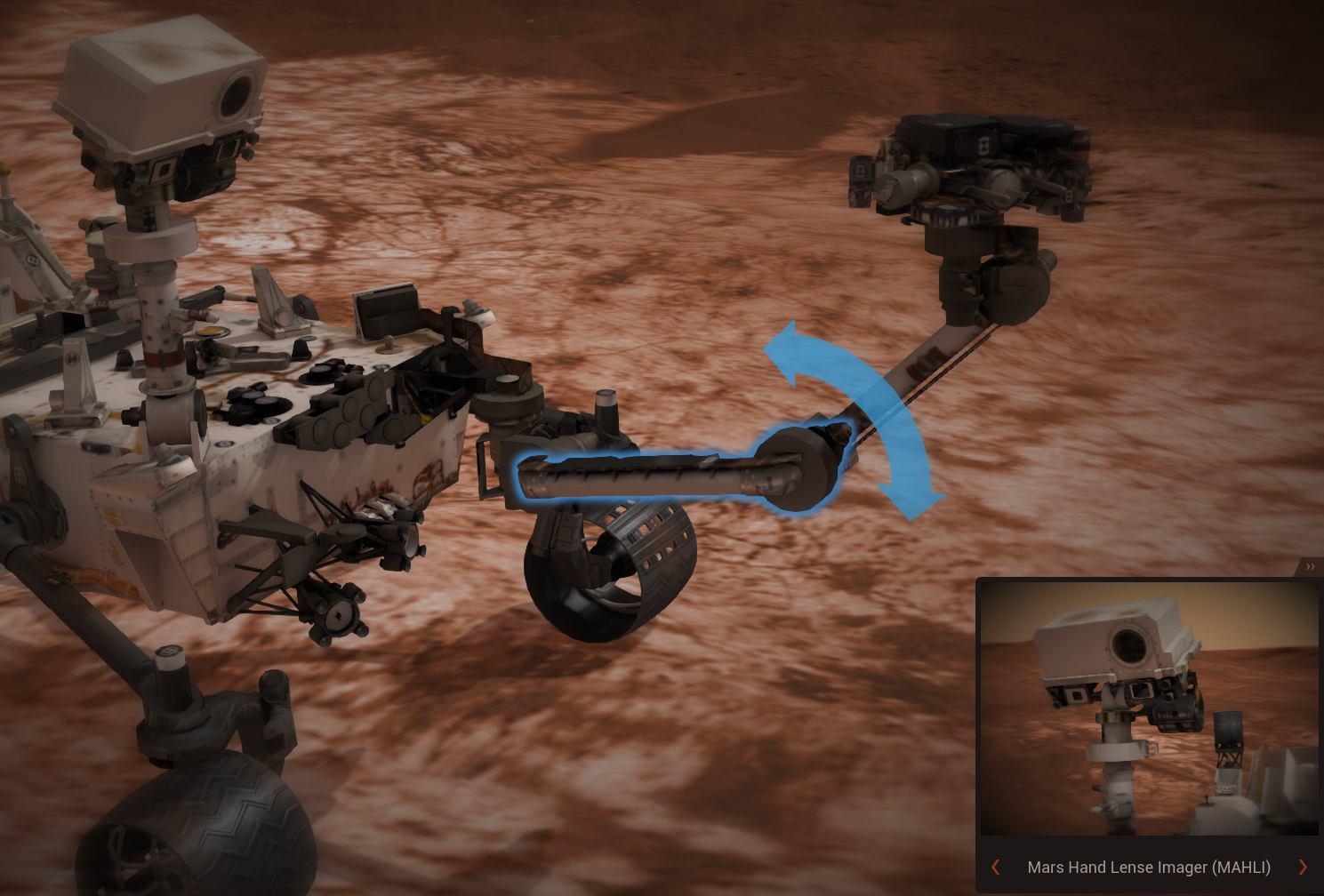
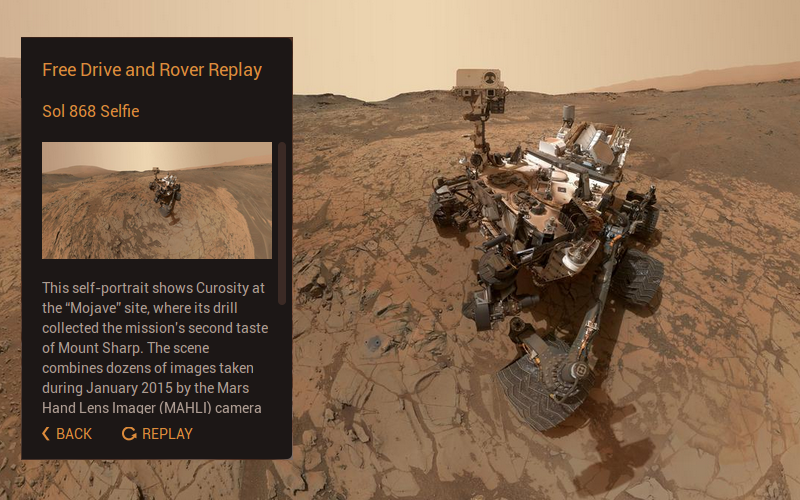
You can control the Mars rover Curiosity in NASA’s new interactive application ‘Experience Curiosity‘. Drive it around the surface of the planet, control the robot arms and take pictures. The entire project is powered by Blender and Blend4Web!
NASA writes:
Experience Curiosity allows viewers to journey along with the one-ton rover on its Martian expeditions. The program simulates Mars in 3-D based on actual data from Curiosity and NASA’s Mars Reconnaissance Orbiter (MRO), giving users first-hand experience in a day in the life of a Mars rover.
A NASA team already is using Mars Trek to aid in the selection of possible landing sites for the agency’s Mars 2020 rover, and the application will be used as part of NASA’s newly-announced process to examine and select candidate sites for the first human exploration mission to Mars in the 2030s.
“This tool has opened my eyes as to how we should first approach roaming on another world, and now the public can join in on the fun,” said Jim Green, director of NASA’s Planetary Science Division in Washington. “Our robotic scientific explorers are paving the way, making great progress on the journey to Mars. Together, humans and robots will pioneer Mars and the solar system.”
Mars Trek has interactive maps, which include the ability to overlay a range of data sets generated from instruments aboard spacecraft orbiting Mars, and analysis tools for measuring surface features. Standard keyboard gaming controls are used to maneuver the users across Mars’ surface and 3-D printer-exportable topography allows users to print physical models of surface features.
Links

Awesome news! That takes blender to the top. Thnx for the info Bart.
-Sayan.
Congratulations to Blender and the team at Blend4Web for getting the attention of NASA!
Technology, once again is removing the barriers. Union of people around the knowledge: Generosity as reference. We can see that Curiosity rhymes with Generosity.
All the best for both teams, Blend4Web and Nasa.
Thanks! ;)